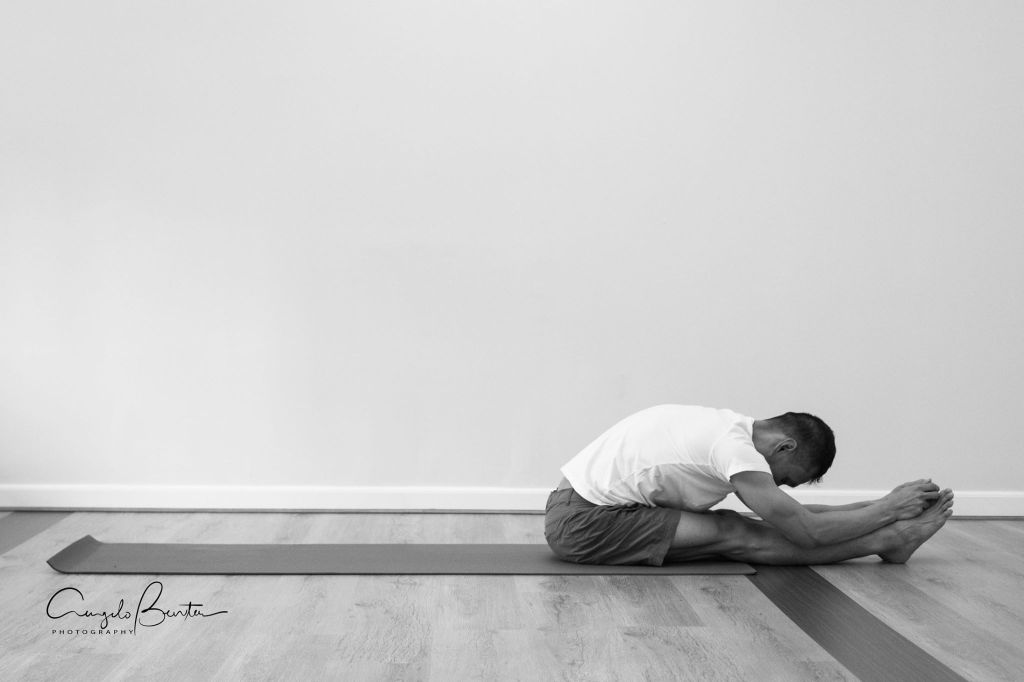
Hatha Yoga was never intended as a physical fitness system. It was a complete path of self-transformation, practised over many years to prepare the body, mind, and energy system for meditation and higher states of consciousness.
The practices of asana, pranayama, mudra, and bandha were developed to purify the body, regulate the flow of energy, and cultivate mastery over the senses and mind. As the subtle pathways of the body begin to open, awareness naturally turns inward. What begins as a physical practice gradually becomes a spiritual exploration.
Hatha Yoga is the foundation for meditation. It is one of the most profound and demanding yogic disciplines. Rather than working on the surface, it transforms the deeper energetic and psychological layers of our being. Progress requires patience, sensitivity, discipline, and consistent practice.
Hatha Yoga: It’s Meditation, Not Gratification
My understanding of Hatha Yoga comes from direct experience rather than theoretical study. I spent little time with books, and when I do encounter them, the insights tend to come almost by accident. Even then, I interpret what I read in a practical way, keeping my teachings grounded and applicable rather than esoteric.
I built this platform through years of consistent practice. I practise hatha yoga daily – asana, pranayama, mudra and sadhana. My days are well-planned to suit the modern requirement of work-life-yoga balance. In time, certain states unfolded naturally, samadhi among them – not as something pursued, but as result of sustained effort and repetition.
Traditional Hatha Yoga follows a natural progression. Each practice prepares the ground for the next, allowing deeper experiences to arise with greater ease and stability. While much can be learned from books, some aspects of the tradition cannot be fully captured in writing. Certain methods, refinements, and practical drills are passed directly from teacher to student, preserving the experiential wisdom that has always been at the heart of the yogic path.
Body parts that may seem unimportant in the practice like the eyes, tongue and fingers become major players in channelling the energy (mudra).
In time, a hatha yogi just can just sit in Sukhasana and yet they can easily dissolve deep energetic blockages within the system. Their inner pathways are so open they can feel when health issues are about to happen. Their brains can absorb and release electrical signals so effectively they can easily enter the realms of nada (inner sound), spanda (vibration), and soma (nectar). These experiences are not the goal though, but signs that awareness is moving beyond the ordinary senses.
As tension dissolves, the breath becomes effortless, the spine more receptive, and the mind increasingly still. At subtler levels, practitioners may become aware of internal phenomena described in the yogic texts as nada (inner sound), spanda (vibration), and soma (nectar). These experiences are not the goal, but signs that awareness is moving beyond the ordinary senses. In meditation, we focus upon them in absorbing the mind.
To all Hatha Yoga teachers and students, keep the fire of practice burning.





Leave a Reply