
The Interplay of Agni and Soma in Hatha Yoga
In Hatha Yoga, Agni and Soma represent the qualities of Apana and Prana Vayus, the vital energies essential to life. Though they seem like opposites, Agni and Soma are interdependent, each requiring the other to fully exist and flourish. Agni embodies both material and spiritual light, radiating warmth and energy, while Soma is an oily, fluid substance that absorbs and reflects Agni’s light and heat. Without Agni, Soma would eventually dry out; without Soma, Agni can dissipate into the vastness of the cosmos. The endless interplay of these two forces gives rise to the intermediary elements of air, matter, and ether, weaving the fabric of creation itself.
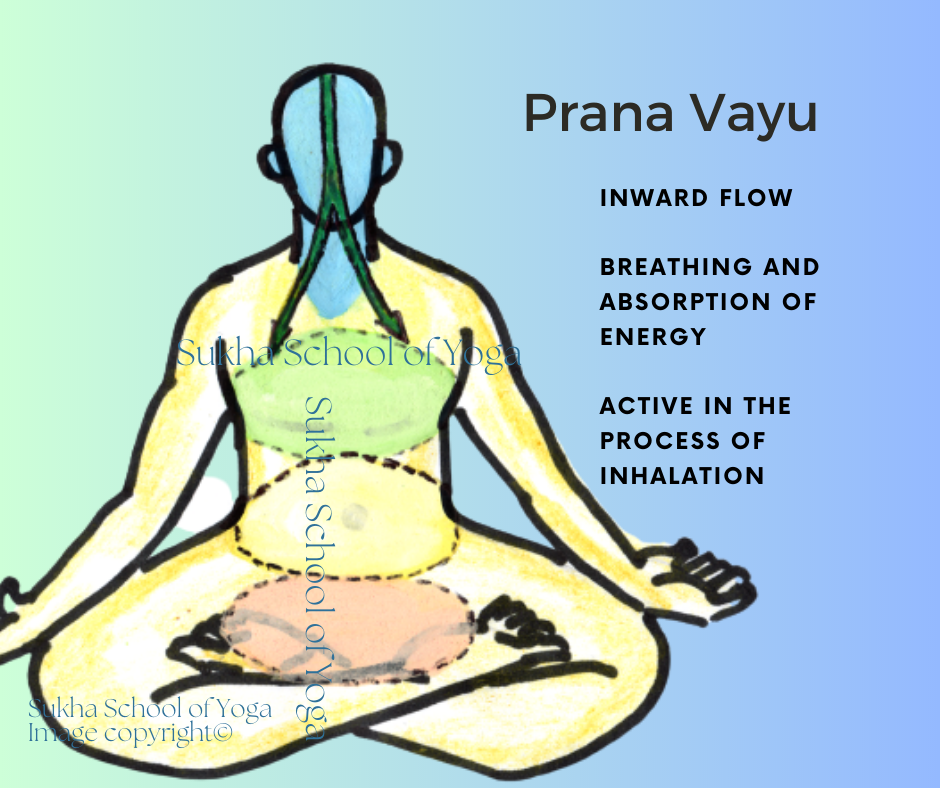

On a deeper level, Agni and Soma (Apana and Prana) represent sound and vibration—the only two elements that pervade eternity, void, and time. Together, they create the rhythm of life, uniting opposites and sustaining the universe’s fundamental harmony.
Supporting Textual Foundations and Personal Experiences
Classical yoga and Vedic texts discuss the interplay of Agni and Soma, as well as their roles in cosmic and human energy dynamics, closely aligning with this interpretation:
- Rigveda: The Vedic hymns are some of the earliest texts to highlight Agni and Soma as complementary forces. Agni, the fire deity, symbolises energy and transformation, while Soma, also known as Chandra, the moon god who governs plants and vegetation (Soma is also a name of a sacred plant), represents rejuvenation, cooling qualities, and receptivity. After Indra, Agni and Soma are the most frequently mentioned deities, with 200 hymns mentioning Agni and 123 Soma. The Rigveda illustrates their interdependence, portraying them as a crucial cosmic duality.
- Yoga Sutras of Patanjali: Although the Yoga Sutras do not directly mention Agni and Soma, they briefly discuss asana and pranayama which of course are performed to balance of Prana and Apana Vayus—opposite forces within the body—to achieve inner harmony. This idea aligns with the Hatha Yoga practice of uniting Prana and Apana through the bandhas, which is the union of Soma (as Prana) and Agni (as Apana). The Sutras also mention a white light that arises as one becomes absorbed in meditation.
- In my experience, this white light (jyoti) can appear by focusing the eyes between the eyebrows (internal or external shambhavi mudra), symbolising absorption. While Raja Yoga emphasises meditation as the path to achieving this union, Hatha Yoga takes a more physical approach, refining awareness of the subtle bodies through disciplined practice.
- In Hatha Yoga, the experience of jyoti can emerge as a result of balancing the solar (Pingala) and lunar (Ida) energies, corresponding to the Prana (Soma) and Apana (Agni). When these energies unite through disciplined practices such as pranayama, mudras, and bandhas, they awaken the central energy channel, the Sushumna Nadi. As awareness ascends, the practitioner may perceive this jyoti as a radiant white light, often seen at the Ajna Chakra (the third eye).
- While the Yoga Sutras and Hatha Yoga share common goals—such as achieving union and self-realisation—they represent different approaches. The Yoga Sutras emphasise inner discipline and meditation, while Hatha Yoga provides a more physical and energetic foundation to facilitate spiritual growth.
- Hatha Yoga Pradipika: This foundational Hatha Yoga text prescribes the techniques needed for purifying the energy body, leading to the awakening of the latent potential of the unified Prana and Apana. The prana is contained in the Somarasa, the cranial fluid that nourishes the sushumna nadi and the Agni as the spiritual essence of the apana in the hips. The word Hatha is actually derived from ‘ha’ (solar, soma, prana) and ‘tha’ (lunar, subtle fire, apana). The ultimate goal of hatha yoga is the union of these two vital forces and the regulation of the body’s heat and fluids to facilitate spiritual awakening.
- Shiva Samhita: Expanding on Hatha Yoga’s principles, this text associates Agni with solar energy within the body and Soma with lunar, cooling energy. It discusses how balancing these energies leads to the awakening of latent spiritual potential, aligning with the interpretation of Agni and Soma as essential for higher consciousness.
- Upanishads: Core Indian texts of Upanishads, such as the Chandogya and Brihadaranyaka, delve into the metaphysical aspects of Agni and Soma, portraying them as symbolic representations of sound, vibration, and eternal principles. They explore how these forces create and sustain existence, echoing the view of Agni and Soma as foundational elements that pervade time and space. This one certainly close to my heart as I have experienced them first hand countless times in my meditation.
Practical Application in Hatha Yoga and Dietary Programme
Subscribe to get access
Read more of this content when you subscribe today.
 Sukha Yoga
Leave a comment