Breath is the Grace of God.
Back to Basics
Awareness and appreacition of our innate gift increases our understanding of ourselves and later on, of all.
The profound influence of the natural breath cannot be overstated. It has the potential to heal the body and alleviate anxiety. Through mindful observation, we could open the unadulterated and pristine essence of existence. Enlightened beings possess a heightened state of awareness, attuned to the subtle currents that flow around them. Their senses are so sharp that they can discern the inner and metaphysical realms, a sensation that might overwhelm the majority of us. However, the awakened ones, though in a perpetual state of observation and contemplation, remain undisturbed. They have reached the pinnacle of wisdom through their dedicated practice of meditation.
Select a peaceful, interruption-free spot in your home for meditation. Designate it as your dedicated meditation area, devoid of distractions. If your only option is your bedside, find a corner facing away from disruptions. You can also lean against your bedside for support.
As a beginner, you can meditate anywhere, but having a consistent place to practice can be valuable for sustaining it. This straightforward yet crucial step trains the brain to adopt a supportive routine and assists in cultivating a meditative and spiritually enriching environment.
Related Lesson: Learn the Basic Steps of Meditation.
The Mind Rides the Wave of the Breath
Then, as soon as you sit, examine your conscious mind. Dedicate the moment for your peace.
Inhale deeply, allowing the breath’s flow to fully awaken your spine. Direct the breath up to the top of your nostrils and lift your optic nerves, as if looking internally between your eyebrows. This engages the brain. As you exhale, softly release any tension in your eyes. Internally affirm what you want your brain to concentrate on for the entirety of your meditation. Repeat it three times… Inhale, mentally saying “I am”. Exhale, and say “breathing”. “I am breathing… I am meditating.”
Our brains are ever-changing. Calming our senses can be the most challenging task, and often, it’s the biggest hurdle to achieving focus and concentration. The breath serves as an excellent starting point for our journey. It carries everything along its waves. When we channel our attention to the breath, the senses settle, and the pace of brain activity naturally slows.
Take mindfull, deep breaths. Whenever your focus wavers, guide it back to the sensations of your breath. Pay close attention to the sound of each breath, feeling the air pass in and out of your nostrils. Notice how the inhalation echoes a soft “sa” sound, while the exhalation carries a gentle, humming “ha”. Feel the temperature shift – the cool, dry air brushing against the walls of your nostrils as you breathe in, and the warm, moist air dissipating as you breathe out.
Examine the texture, the length and the flow of your breath. Your breath has an image too. See the radiance hovering over your forehead, then, completely relax your eyes through each exhalation.
The power of the breath is limitless. Later on, it will stop spontaneously to pave way for the rising of the soul. But before that happens, we must know its natural tendencies first. This is an initial step in unravelling awareness from the bondages of the conscious mind.
Natural Breath Meditation: Guided Practice
As soon as you sit for your meditation, focus the mind right away. If you need to adjust and move, do it so gently as not to distract your concentration. Just like any other skill, meditation requires time and practice to grow. Do not give up easily. Be patient. If it becomes too difficult to focus on the breath, just remain seated. Acknowledge the cause of your restlessness and mentally say your resolve (sankalpa) again. Then, watch it go away.
This Lecture will go live 01 November 2023.
Breath Awareness as a Way Of Life
Breath is life. Meditating upon its presence is meditating upon our lives. It is the now, the present as it is. We can apply the skill in almost all the things we do daily. As soon as we bring our attention to the breath, the great power of observation comes to us naturally. We find that we are in a state of observation all the time. When you are feeling unhappy, anxious, hurt and you feel heavy all over, stop, sit down and breathe deeply.
Breath is life. Meditating on its essence is a meditation on our very existence—the present moment as it stands. This practice can be applied to nearly every aspect of our daily lives. When we redirect our focus to the breath, the power to observe naturally arises within us. It arouses our self awareness and how are actions could affect our circles. When emotions like unhappiness, anxiety, or heaviness weigh upon us, take a pause, find a seat, and take deep breaths.
The breath possesses the potential to elevate your body, mind, and spirit to a higher state. Within your breath resides the essence of the divine. The very first life force, known as prana, is woven into every breath. Regard each inhale as a fresh start. Exhale the past.
Everything shall pass, including your pains and sorrows. Whatever is causing you to feel unhappy does not matter because the grace of God only brings joy and peace. And it is in the breath. You will be surprised at how quickly your awareness will shift from sadness to joy, from a state of lack to abundance, seemingly rejuvenate again at the very thought of the grace of God flowing in you as you breathe deeply.
Meditation Posture for Beginners
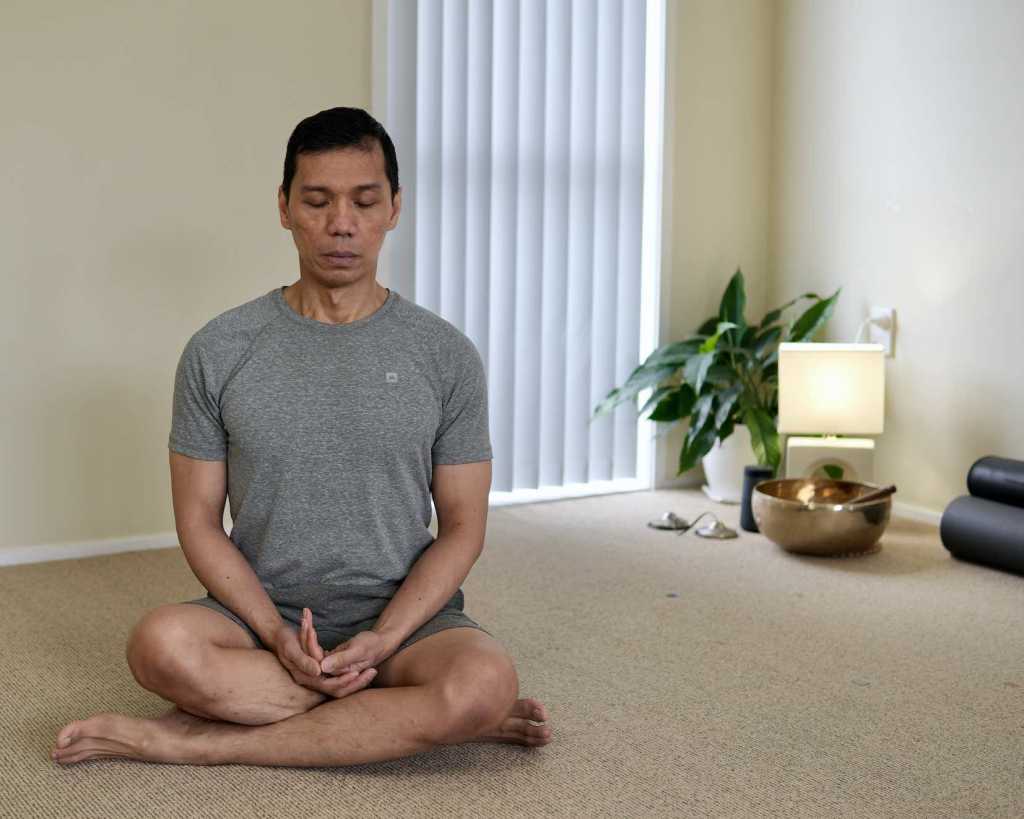
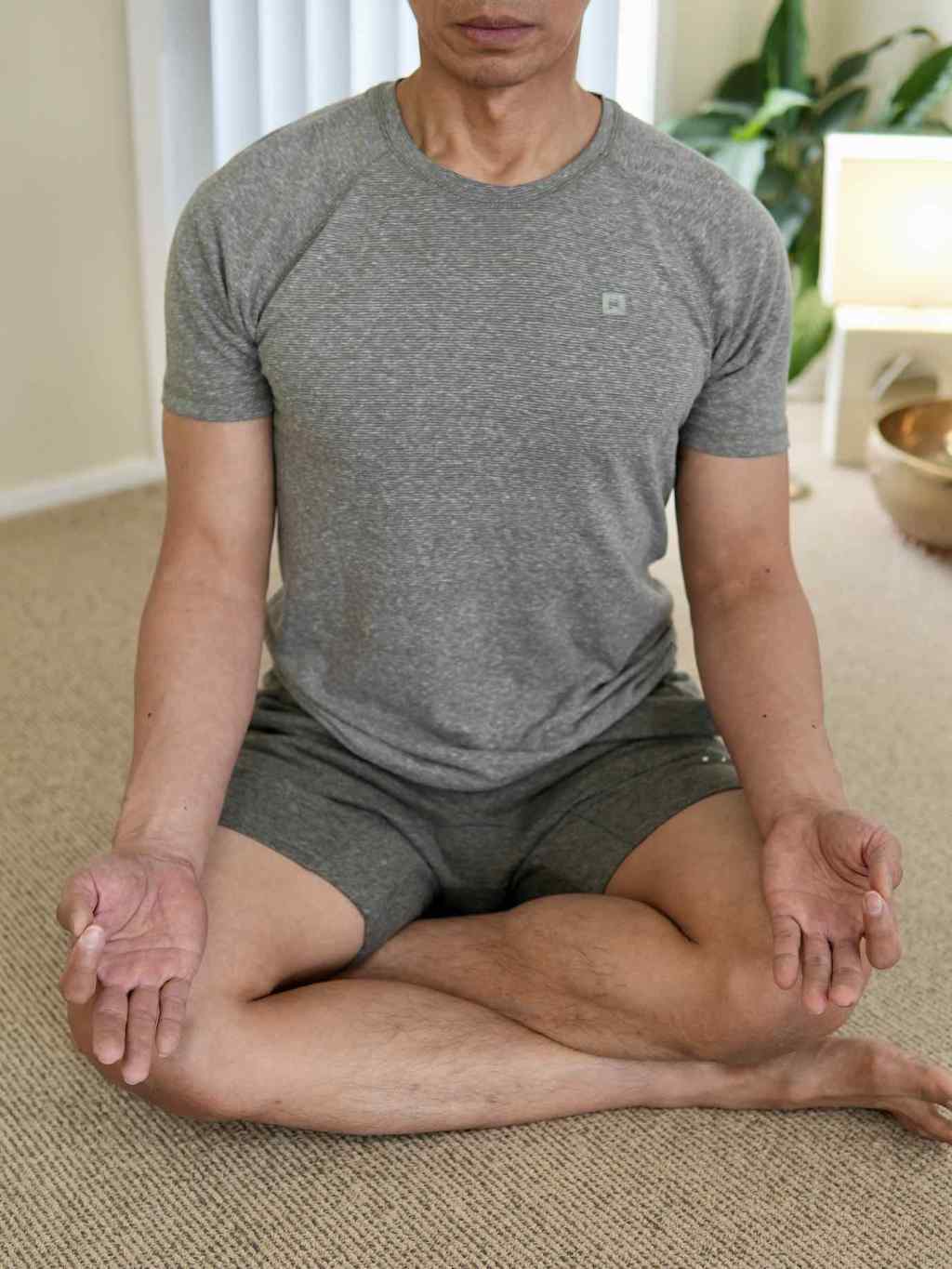
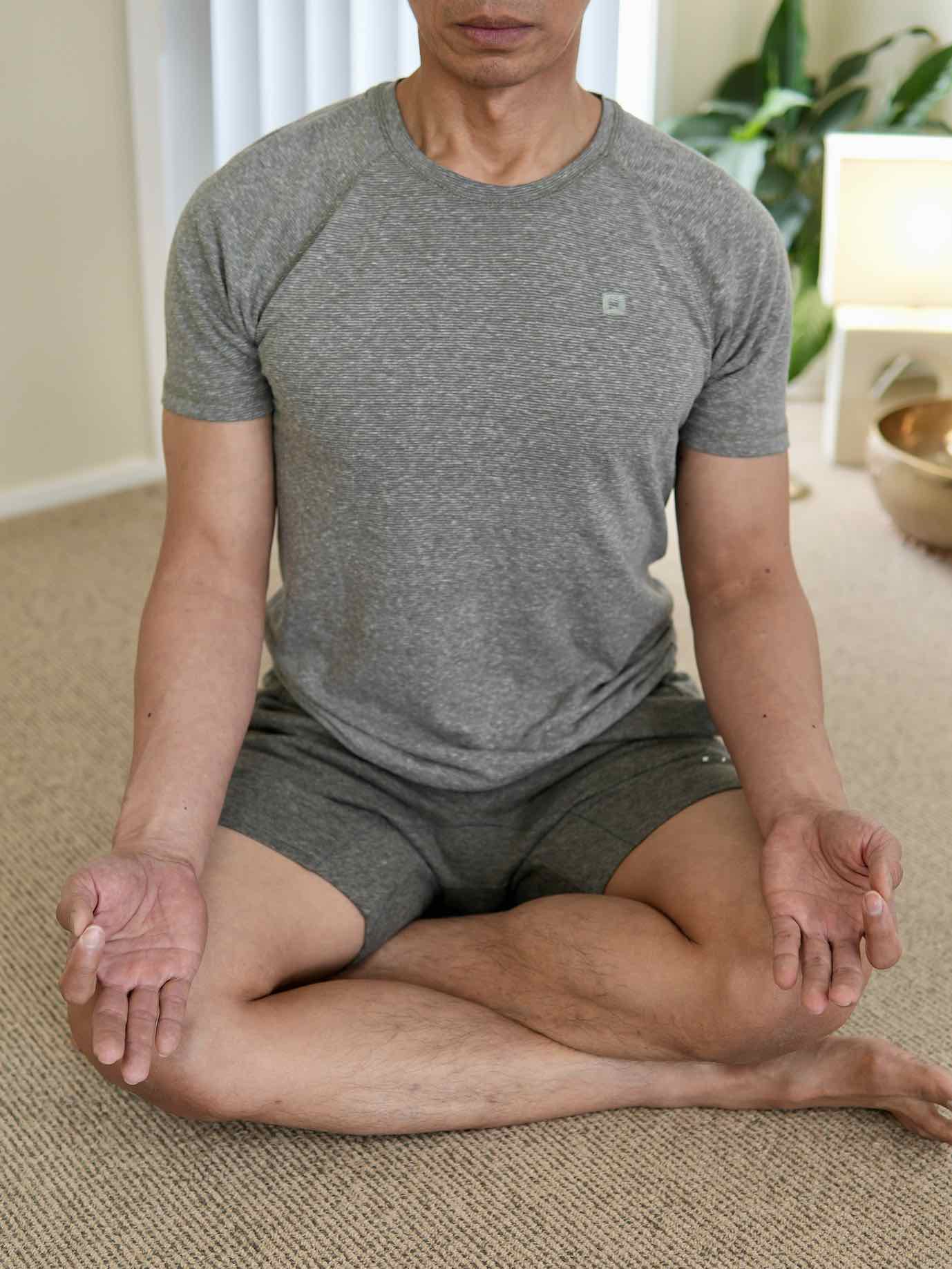
Sukhasana Happy Posture
Sit on a firm cushion at an appropriate height for you to make the posture comfortable. Sitting on a firm cushion helps in stimulating and directing subtle energies. To avoid straining the back muscles try to keep the knees lower than the level of the hips, or at least at the same level. This allows your thighs to relax downward, reducing tension in the hips and frees the spine to lengthen upwards. If you have a knee injury then support both knees with firm cushions, bolsters or rolled blankets under them.
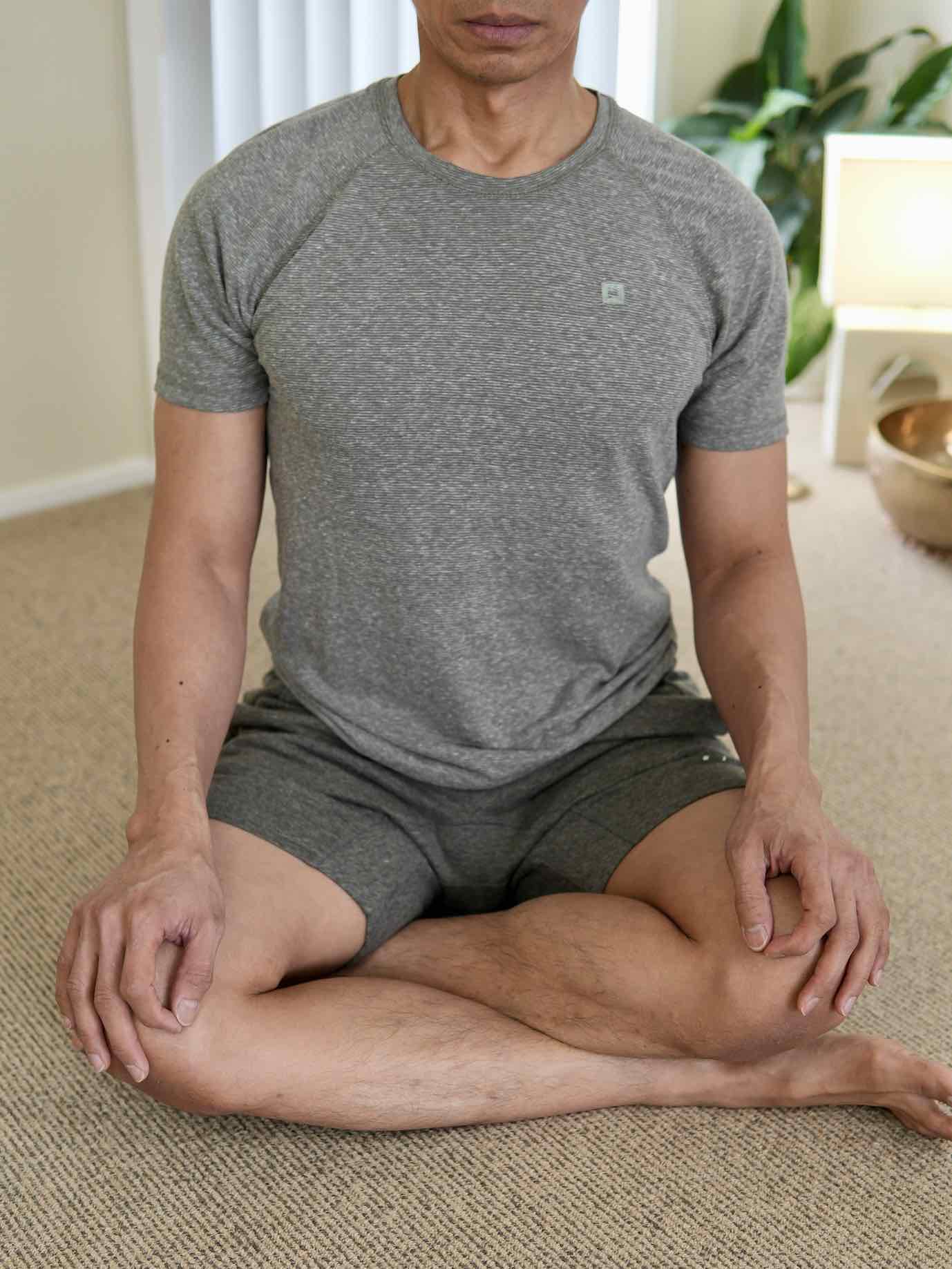
Cross both legs, the right foot under the left thigh and the left foot under, or in front of, the right calf on the floor. Sit upright with your weight balanced on all sides, left and right, front and back. You may circle the body around so that the joints of the hips and lower back organically adjust to their comfort. Align the upper body and shoulders directly over the base of the spine. Inhale to open the spine and expand the chest. Exhale to relax the shoulders and calm the nervous system. You may rest your hands on your knees or do a dhyana mudra.
Support My Teachings
Make a one-time donation
Make a monthly donation
Make a yearly donation
Choose an amount
Or enter a custom amount
Your support not only helps keep the website running but also treats me to a cup of coffee whenever I’m writing and filming lessons. Thank you.
Blessings,
Fyodor
Your contribution is appreciated.
Your contribution is appreciated.
DonateDonate monthlyDonate yearlyAlternative Posture for Meditation
Chair Meditation
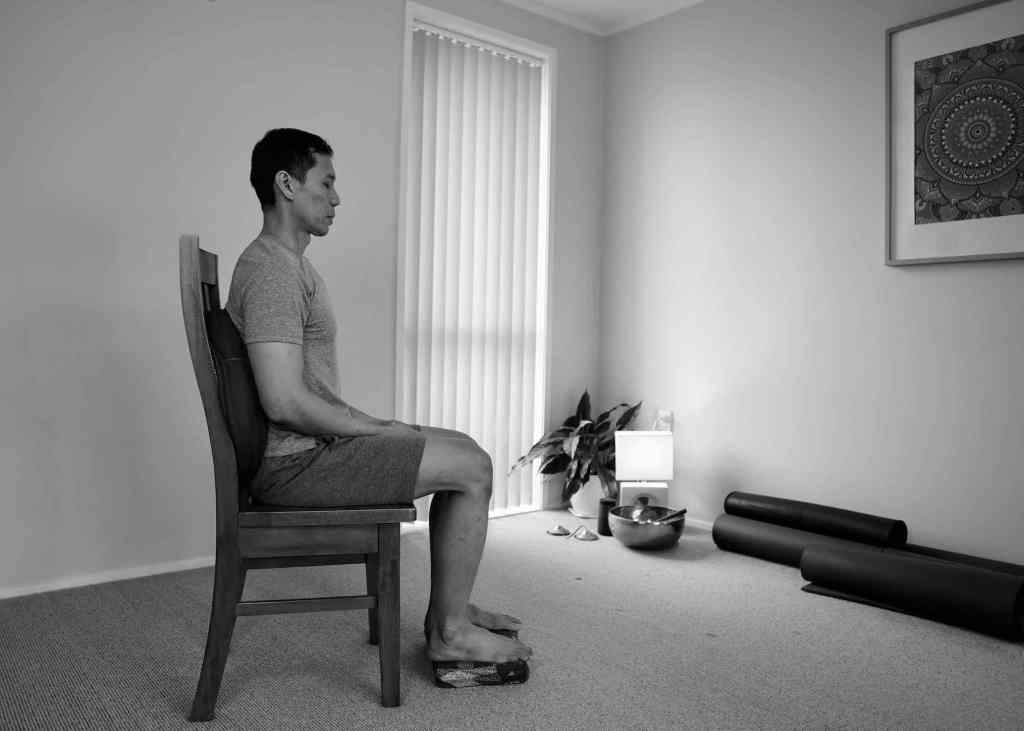
To use a chair for your practice, sit on an upright chair that has no arm-rests. If the chair is too high for your feet to touch the floor, elevate them with a prop – block, blanket, stack of books, etc. Make sure that the spine is tall, the hips are level, the body is relaxed and the mind is alert. Your head, neck and spine are aligned so that the energy could freely flow through the spine to the higher brain centres. If the legs feel cold, cover them with a blanket.
Place the hands relaxed in dhyana mudra. The left hand over left, palms up if you feel grounded. The right hand over the left if you feel energised. Roll the shoulders a few times to release any stagnation in the upper back and lightly stretch the neck too. Do not round your back. You may support your back with a cushion so that the body remains relaxed throughout your meditation and breath awareness practice.
Hand Mudras for Meditation

Premium Content: Classes for Opening the Hips
Subscribe to get access
Read more of this content when you subscribe today.
 Sukha Yoga
Comments
One response to “Open to Grace: Natural Breath Meditation | Open Lesson”
[…] the physical body develops, the breath grows too. The first is the natural breath – effortless breathing that sustains life. It is already happening. Yet even this natural breath is influenced by how we live: our diet, our […]
LikeLike